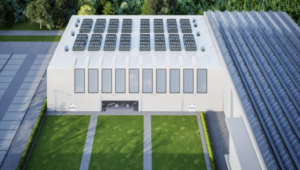
When a data center is proposed, local leaders are often asked to weigh significant economic opportunities against equally significant questions about infrastructure, land use and long-term community impact.
The challenge is that data centers are not ordinary commercial buildings. They may require substantial electricity, specialized utility infrastructure, large parcels of land and years of phased construction. At the same time, they can generate tax revenue, construction activity and investment in communities that are prepared to accommodate them.
The role of a local leader is not simply to support or oppose a project. It is to make sure the community has the information, safeguards and public process needed to make a sound decision.
Begin with the specific project, not the industry in general
The term “data center” can describe many different types of facilities.
A small data center supporting regional businesses is very different from a multi-building campus designed for cloud computing or artificial intelligence. Projects may vary in their:
- Total acreage
- Number and size of buildings
- Electricity demand
- Cooling technology
- Water use
- Backup-generation systems
- Construction timeline
- Permanent workforce
- Tax structure
- Distance from homes and public facilities
Local leaders should be cautious about applying statistics from one project or market to another. The most useful information will be specific to the proposed site, its planned use and its full buildout.
Ask the developer to explain not only what will be built initially, but what the property could ultimately become under the requested zoning and approvals.
Understand the project’s full electricity requirement
Electricity is often the most consequential infrastructure issue associated with data center development.
According to Lawrence Berkeley National Laboratory, a U.S. Department of Energy research laboratory, data centers accounted for approximately 4.4% of total U.S. electricity use in 2023. Its latest analysis estimates that their share could rise to 11.8% by 2030, with scenarios ranging from 9.5% to 15.3%, depending on factors such as data center growth and changes in electricity demand across the broader economy.
These national estimates do not determine the impact of any individual project, but they demonstrate why local and regional energy planning is an important part of evaluating data center development.
A proposed data center may be developed in stages, with electricity demand increasing as additional buildings and computing equipment are added. Leaders should request projected demand for:
- The first operating phase
- Each planned expansion
- The completed campus
- Normal operations
- Periods of peak use
Local officials should also ask the electric utility:
- Does adequate generation and transmission capacity currently exist?
- What substations, transmission lines or other upgrades will be required?
- How long will those improvements take?
- Who will pay for them?
- Could any costs be shifted to residential or small-business customers?
- How will reliability be protected during periods of high demand?
- What happens if the developer reserves capacity but delays or cancels the project?
The Department of Energy offers technical-assistance resources intended to help state and local officials plan for rising electricity demand, grid reliability and infrastructure needs.
Local governments do not need to perform the utility’s engineering work. They do, however, need a clear understanding of what the project requires and how those requirements may affect the broader community.
Evaluate water use based on the proposed cooling system
Some data centers use water as part of their cooling systems, while others rely more heavily on air cooling, closed-loop systems or other designs.
The amount of water used can depend on the facility’s technology, computing density, climate and operating practices. A single industry average will not provide enough information for a local decision.
Leaders should ask:
- What cooling technology will the facility use?
- How much water will it withdraw and consume annually?
- What will water demand be during the hottest days?
- Will the project use drinking water, groundwater, reclaimed water or another source?
- How will water use grow as the campus expands?
- Could drought conditions or usage restrictions affect operations?
- Will water use be independently measured and publicly reported?
- What water-conservation or reuse options were considered?
Water reuse may provide an alternative in some communities. In Quincy, Washington, Microsoft and the city developed a system that treats and recirculates data center cooling water, reducing reliance on potable groundwater. That example shows what may be possible, although the same approach will not be practical in every location.
Local leaders should evaluate the project within the context of the community’s existing water supply, planned growth, drought risk and long-term infrastructure needs.
Look beyond the headline investment figure
Data center announcements frequently emphasize total capital investment. That number can be impressive, but it does not tell local leaders how much economic benefit will remain in the community.
A more complete evaluation should consider:
- Temporary construction employment
- Permanent operating employment
- Expected salaries and qualifications
- Local hiring potential
- Opportunities for local contractors and vendors
- Real-property tax revenue
- Business personal-property or equipment tax revenue
- State and local tax exemptions
- Public infrastructure costs
- The value of any incentives offered
- How equipment depreciation may affect future revenue
Virginia’s Joint Legislative Audit and Review Commission found that data centers can generate substantial local tax revenue. It also found that much of the industry’s broader employment and economic benefit comes from construction rather than ongoing data center operations.
That does not mean permanent employment is unimportant. It means leaders should separate construction jobs from long-term positions and avoid presenting them as one combined figure.
An independent fiscal-impact analysis can help officials compare expected revenue with the cost of roads, utilities, public safety, planning staff and other services required by the project.
Examine incentives in relation to the public return
States and local governments may offer sales-tax exemptions, reduced equipment-tax rates, grants or infrastructure assistance to attract data center investment.
Any incentive should be evaluated against a clearly defined public benefit.
Questions may include:
- What is the total value of the incentive?
- How long will it remain in effect?
- What investment or employment commitments must the company meet?
- Are incentives tied to measurable performance?
- Can benefits be recovered if the project is not completed?
- How does the incentive affect projected local tax revenue?
- Would the development occur without the incentive?
- What other uses could be made of the public resources involved?
Virginia’s Joint Legislative Audit and Review Commission reported that the state’s data center sales-and-use tax exemption provided approximately $928 million in tax savings in fiscal year 2023 and was used by about 90% of the industry. The scale of the exemption illustrates why incentive costs should be considered alongside projected investment, tax revenue and other economic benefits.
Local leaders should be able to explain the complete financial arrangement to the public—not simply the size of the announced investment.
Plan for years of construction
Large campuses may be built in phases over many years.
Construction impacts can include truck traffic, road damage, noise, dust, temporary lighting, blasting, worker parking and disruptions near homes, businesses or schools.
Before approvals are granted, leaders should request a construction-management plan addressing:
- Permitted construction hours
- Designated truck routes
- Road maintenance and repair
- Dust and erosion control
- Stormwater management
- Worker parking
- Blasting or rock removal
- Temporary lighting
- Major equipment deliveries
- Communication with nearby residents
- Complaint-response procedures
- Coordination with schools and emergency services
Written requirements are more reliable than informal assurances. Expectations should be incorporated into permits, development agreements or other enforceable documents when permitted by local law.
Assess noise during normal and emergency operations
Data center noise can come from cooling equipment, transformers, substations, generators and other mechanical systems.
Local leaders should request an acoustical study prepared by a qualified professional. The study should evaluate sound at nearby property lines and sensitive locations, including homes, schools, parks and places of worship.
It should consider:
- Normal facility operations
- Multiple buildings operating together
- Generator testing
- Emergency generator use
- Seasonal differences
- Existing background noise
- Low-frequency sound
- Future phases of development
Leaders should also determine whether the locality’s existing noise ordinance was designed to address continuous industrial sound. An ordinance focused primarily on short-term disturbances may not adequately address a facility operating around the clock.
Consider establishing measurable limits, monitoring requirements and a clear process for investigating complaints.
Understand backup power and air permitting
Because data centers are designed to remain operational during power interruptions, they often include backup generators or other on-site power systems.
Stationary engines and combustion turbines used for primary or backup power may be subject to federal Clean Air Act standards, state rules and local permitting requirements. The Environmental Protection Agency provides regulatory resources specifically addressing these systems at data centers.
Local leaders should ask:
- How many generators will be installed?
- What fuel will they use?
- How often will they be tested?
- How long could they operate during an outage?
- What emissions permits will be required?
- How will emissions be monitored?
- How close will the equipment be to homes and schools?
- Are batteries or other lower-emission technologies part of the plan?
Officials should coordinate with the appropriate state and federal regulatory agencies rather than relying exclusively on information supplied by the developer.
Review land use and cumulative development
A single data center proposal may appear manageable when evaluated on its own. The larger question is what happens if several facilities or campuses are developed within the same area.
Local governments should consider:
- Whether the proposed location is consistent with the comprehensive plan
- The amount of industrially zoned land available
- Proximity to homes and community facilities
- Preservation of agricultural land, forests or open space
- Wetlands, streams and wildlife habitat
- Building height and visual impact
- Transmission lines and substations
- Water and sewer capacity
- Road capacity
- The cumulative demand of future projects
Approving one project can influence land values, utility planning and future development patterns. Leaders should understand whether the decision establishes a precedent or creates infrastructure that is likely to attract additional projects.
Communities experiencing significant interest may benefit from establishing data center-specific zoning standards before considering multiple individual applications.
Define community benefits with the community
A community benefit should respond to an identified local need—not simply provide a visible sponsorship opportunity.
Potential priorities may include:
- Road or intersection improvements
- Water and wastewater infrastructure
- Workforce training
- Scholarships and technical education
- Emergency-services equipment
- Environmental restoration
- Parks and green space
- Support for local businesses
- Digital-literacy programs
- Broadband or connectivity improvements
Although it was developed for federally funded energy projects rather than specifically for data centers, U.S. Department of Energy community-benefits guidance offers a useful framework for public engagement. It recommends identifying affected stakeholders, maintaining ongoing engagement, sharing information about potential project impacts and explaining how community feedback will influence project decisions.
Leaders should ask whether proposed benefits are:
- Based on community input
- Proportionate to the project
- Written into an agreement
- Funded for a defined period
- Measurable
- Publicly reported
- Enforceable when appropriate
One-time donations can be useful, but they should not substitute for addressing infrastructure demands or operational impacts created by the project.
Build accountability into the approval process
Public attention is usually greatest before a project is approved. Accountability becomes most important after construction begins.
Local leaders should establish clear expectations for:
- A named community contact
- Regular project updates
- Construction notifications
- Complaint tracking and response
- Water-use reporting
- Noise monitoring
- Progress on local hiring
- Community-benefit commitments
- Environmental compliance
- Future expansions
- Ownership changes
Commitments should remain in effect if the facility is sold or transferred to another operator.
Where possible, reporting requirements should use consistent metrics so officials and residents can evaluate performance over time.
Communicate what is known—and what is not
Local leaders may feel pressure to take a position before all project details are available.
It is reasonable to say that additional information is needed.
Residents should be told:
- What has been proposed
- What approvals are required
- Which details are still unknown
- Which agencies are reviewing the project
- When public input will be accepted
- What standards will guide the decision
- Which commitments will be enforceable
- How the final decision will be made
Technical information should be translated into plain language. Public meetings should give residents enough context to ask informed questions rather than requiring them to interpret engineering reports on their own.
A strong process benefits everyone
Thorough review does not have to mean unnecessary delay.
A clear process helps developers understand expectations, gives residents meaningful opportunities to participate and allows public officials to make decisions based on complete information.
For local leaders, the central question is not simply whether data centers are beneficial or harmful.
It is:
Does this particular project fit our community, and have we established the information, protections and commitments necessary to manage it responsibly?
The answer should be based on local priorities, independent analysis and the full life of the project—from site preparation and construction through operation, expansion and eventual redevelopment.
Questions Local Leaders Can Begin Asking
Before advancing a data center proposal, consider asking:
- What is the project’s full planned buildout?
- How much electricity will each phase require?
- What utility upgrades are needed, and who will pay?
- What cooling system and water source will be used?
- What tax revenue will remain after incentives?
- How many construction and permanent jobs are expected?
- What will nearby properties experience during construction and operation?
- What environmental and land-use impacts require further study?
- Which community priorities will the project support?
- How will commitments be measured and enforced over time?
Local leaders do not need to have every answer at the beginning. They do need a process capable of finding those answers before lasting decisions are made.