Every time you stream a movie, check your bank balance, join a video call, use a navigation app or save a document to the cloud, information has to be stored, processed and delivered to your device.
Much of that work happens inside data centers.
A data center is a physical home for digital information
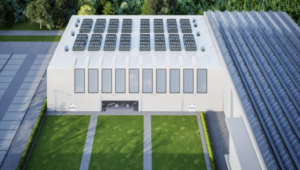
A data center is a building or group of buildings that houses computing equipment. Inside, rows of servers store and process data, network equipment moves information between systems and storage devices preserve files and records.
Data centers also include infrastructure that keeps that equipment operating reliably. That may include electrical systems, backup power, cooling equipment, fire protection, physical security and multiple network connections.
The word “cloud” can make digital services seem as though they exist somewhere in the air. In reality, cloud computing depends on physical infrastructure. The National Institute of Standards and Technology defines cloud computing as on-demand access to shared computing resources such as networks, servers, storage, applications and services. Those resources must ultimately operate from physical facilities, including data centers.
What happens inside a data center?
A data center performs several basic functions:
Storing information
Data centers hold everything from business records and photographs to medical information, videos, websites and software.
Not every piece of information is stored in one place. Organizations may distribute data across several facilities to improve reliability, performance and security.
Processing information
Servers do more than preserve files. They also perform calculations and run applications.
When you conduct an online search, use an artificial intelligence tool or request information from an app, computing systems process that request and return a result.
Moving information
Data centers connect to fiber-optic networks and other communications infrastructure. Those connections allow information to travel between the data center, businesses, communications networks and individual users.
The distance between a user and the infrastructure processing a request can affect how quickly the service responds. This is one reason some data centers are located closer to major population centers, businesses or network routes.
Keeping digital services available
Many organizations cannot afford to lose access to their systems when a single piece of equipment fails or when utility power is interrupted.
Data centers may therefore use redundant electrical systems, backup generators, batteries, cooling equipment and network connections. The design depends on the facility and the level of reliability its customers require.
Are all data centers the same?
No. Data centers vary significantly in size, purpose and design.
An individual business or government agency may operate a private facility for its own systems. A colocation data center provides secure space, power and connectivity to multiple customers. A cloud provider may operate large facilities that support computing and storage services used by organizations around the world.
Some facilities are designed for artificial intelligence and other high-performance computing applications. Others support websites, business software, financial services, communications platforms or government systems.
A small facility serving a local organization may have a very different footprint and resource profile from a large campus containing several buildings. Communities should therefore evaluate the actual proposal being considered rather than assuming that every data center will have the same impacts.
Why do data centers need so much electricity?
Servers and networking equipment operate continuously and consume electricity while processing and moving information. Additional energy is used by cooling systems, electrical equipment and other building infrastructure.
According to the U.S. Department of Energy, data centers accounted for approximately 4.4% of U.S. electricity consumption in 2023. The department’s 2024 analysis estimated that this share could rise to between 6.7% and 12% by 2028, although actual demand will depend on factors such as technology growth, efficiency improvements and the pace of new development.
Because this demand can be significant, proposed projects may require new utility infrastructure, transmission upgrades or additional electricity generation. Questions about how power will be supplied—and how costs and reliability will be managed—are therefore important parts of the local conversation.
Do data centers use water?
Some do, but water use varies widely.
Water may be used in certain cooling systems that remove heat from computing equipment. Other designs rely more heavily on air cooling, closed-loop systems or technologies intended to reduce direct water consumption.
Climate, facility design, computing density and operating practices all influence water demand. Communities should ask for site-specific estimates rather than relying on a single industry average.
Water reuse can also play a role. In Quincy, Washington, for example, Microsoft and the city developed a system that treats and recirculates cooling water, reducing reliance on potable groundwater.
Why are data centers needed?
Data centers support the digital services used by households, businesses, schools, healthcare providers and governments.
They enable activities such as:
- Online banking and payment processing
- Electronic medical records and telehealth
- Emergency communications and public safety systems
- Video calls and remote work
- Streaming entertainment
- Online education
- E-commerce and delivery systems
- Cloud-based business applications
- Artificial intelligence tools
- Data backup and disaster recovery
That does not mean every proposed project should move forward without careful review. Data centers are physical developments with real infrastructure and land-use implications.
Understanding their purpose is simply the first step toward asking better questions about where they should be located, how they should operate and what responsibilities they should have to the communities around them.
The most useful question is not simply, “What is a data center?”
It is also:
What kind of data center is being proposed, what will it require and how will it affect this particular community?
A productive local discussion starts with clear, project-specific information about the site, power, water, construction, noise, employment, taxes, environmental protections and long-term accountability.