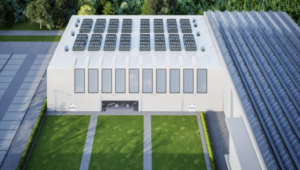
Data centers were once something most people rarely thought about. Today, proposals are appearing before planning commissions, utility regulators and local governments in a growing number of communities.
Several forces are driving that expansion. They include continued growth in cloud computing, artificial intelligence, video streaming, connected devices, online business activity and the amount of information created and stored each day.
At the same time, companies are looking beyond a relatively small group of established data center markets. Power availability, land, network access, customer demand and local development conditions are leading them to consider new regions.
More of daily life now depends on digital infrastructure
The need for digital services did not begin with artificial intelligence.
Businesses have steadily moved applications and information from local computers and private server rooms to cloud-based platforms. Schools use online learning systems. Healthcare providers rely on electronic records and digital imaging. Banks process transactions electronically. Governments operate online services and emergency systems.
Cloud computing allows organizations to obtain computing resources as needed rather than owning and managing all of the equipment themselves. NIST describes it as on-demand network access to shared resources including servers, storage, applications and services.
As more organizations use those services, cloud providers and data center operators need additional physical infrastructure to support them.
Artificial intelligence is accelerating demand
Artificial intelligence applications can require substantial computing power, particularly when large models are being trained or used at scale.
The International Energy Agency projects that global data center electricity consumption could more than double by 2030 in its base-case scenario, reaching approximately 945 terawatt-hours. The agency identifies AI as the most important driver of that projected increase, alongside continued demand for other digital services.
The exact pace of growth remains uncertain. AI hardware, software efficiency, economic conditions, electricity supply and customer adoption could all affect future demand.
Still, the broader direction is clear: companies expect significantly more computing capacity to be needed.
Data is increasingly processed closer to users
Not every digital request needs to travel to a distant facility.
Some applications benefit from having computing infrastructure closer to the people, devices or businesses using it. Reducing that distance can improve response times, support network reliability and help handle local or regional demand.
This can contribute to the development of data centers outside traditional hubs. Facilities may be located near growing population centers, major fiber routes, business clusters, research institutions or industrial areas.
Established data center markets face constraints
Many early data center clusters developed in places with strong network connectivity, available power, suitable land and favorable business conditions.
As those markets have expanded, some have encountered limitations involving:
- Available electricity
- Transmission capacity
- Land prices
- Water availability
- Permitting timelines
- Construction capacity
- Community opposition
- Limits on new development
As a result, developers may evaluate locations where land and power appear more accessible or where governments are actively seeking investment.
That does not necessarily mean a new location is prepared to accommodate a large project. Local governments and utilities still need to determine whether existing systems can support the development without creating unreasonable costs or risks.
Electricity availability is shaping where projects go
Data centers require reliable, continuous electricity. Large projects may represent a major new source of demand within a utility service area.
The Department of Energy reported that U.S. data centers used approximately 176 terawatt-hours of electricity in 2023. Its analysis estimated that use could reach between 325 and 580 terawatt-hours by 2028.
Because electric infrastructure can take years to plan and build, developers often focus on locations where utilities believe they can provide power within the project’s desired schedule.
Communities should understand, however, that being able to connect a facility is not the only consideration. Local leaders may also want to ask:
- What infrastructure must be constructed?
- Who will pay for it?
- Could the project affect rates for other customers?
- How will grid reliability be protected?
- What sources of generation will serve the new demand?
- What happens if the project uses less—or more—power than originally forecast?
Tax policies also influence development
Some states and local governments offer tax exemptions or other incentives intended to attract data center investment.
The potential benefit to a locality can include tax revenue from real estate, equipment or business activity. However, the amount varies based on local tax rates, project structure and the incentives offered.
Virginia’s Joint Legislative Audit and Review Commission found that localities with data centers can receive substantial tax revenue, primarily from real property and business personal property taxes. It also noted that localities that reduce tax rates to attract projects collect less revenue from each development.
Tax revenue should therefore be evaluated in context. Communities need to compare the expected public revenue with the value of any incentives and the potential costs of roads, utilities, emergency services, planning and long-term infrastructure.
Data center growth is not distributed evenly
Development tends to concentrate where several conditions come together:
- Reliable and available electricity
- Strong fiber connectivity
- Suitable land
- Access to customers or major markets
- Manageable development timelines
- A skilled construction and technical workforce
- Supportive zoning and tax policies
Two neighboring communities may therefore experience very different levels of interest.
The type of facility also matters. A large AI-focused campus can have different electricity, cooling and land requirements from a smaller facility designed to serve regional businesses or network traffic.
Growth creates opportunities—and important local decisions
Data centers may bring private investment, construction activity, tax revenue and some permanent employment. They can also create demands involving electricity, water, roads, land, noise and public services.
Those effects are not automatically positive or negative. They depend on the specific project, its location, its design and the commitments made by the company and public agencies involved.
The fact that data centers are being built in more places makes early local planning increasingly important.
Communities do not need to wait until a completed proposal is placed before them. They can establish expectations in advance for land use, environmental information, utility planning, community engagement, financial analysis and long-term reporting.
The goal is not to predict every future development. It is to make sure that when a project is proposed, the community is prepared to evaluate it based on facts and local priorities.